
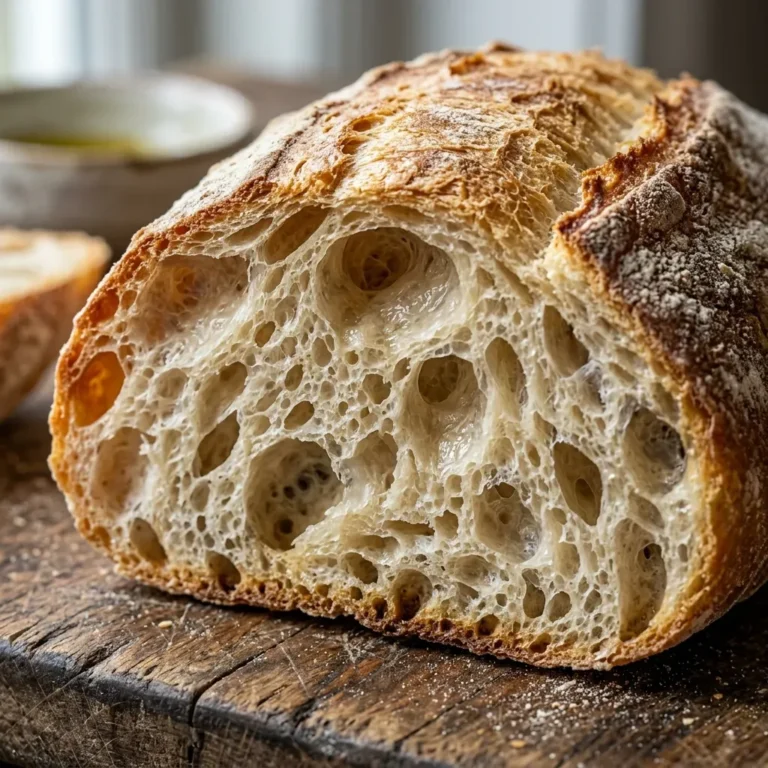
I still remember the first time I bit into a real piece of Traditional Italian Ciabatta. We were visiting a small bakery in Tuscany. The crust cracked audibly.
The inside was a web of airy holes. My kids, covered in flour, declared it better than any toy. That memory fuels my quest to bake this at home.
This recipe captures that authentic, chewy texture. Let me show you how simple this Traditional Italian Ciabatta truly is.
WHY YOU’LL LOVE THIS TRADITIONAL ITALIAN CIABATTA RECIPE
This recipe is a labor of love that delivers big rewards. First, it requires minimal hands-on time. Second, the ingredients are pantry staples.
Third, the result is a stunning loaf with a professional crumb. You will achieve bakery-quality Traditional Italian Ciabatta every time. Plus, the aroma will fill your entire kitchen with warmth.
My family devours it within minutes. It is genuinely foolproof for home bakers.
Print
Traditional Italian Ciabatta
- Total Time: 8 hours 50 mins (includes fermentation)
- Yield: 2 loaves (about 16 servings) 1x
- Diet: Vegetarian, Vegan (if no cheese added)
Description
A classic Italian bread with a crisp crust and airy, chewy crumb, made with simple ingredients and a long, slow fermentation.
Ingredients
3 ½ cups (450g) Bread flour
1 ¾ cups (410ml) Warm water (about 85°F)
1 teaspoon Instant yeast
2 teaspoons Fine sea salt
Instructions
- Mix the dough: Combine flour and salt in a large bowl. Dissolve yeast in warm water. Pour the water into the flour. Stir with a wooden spoon until a shaggy, sticky dough forms. Cover the bowl. Let it rest for 30 minutes
- Perform stretch and folds: Wet your hands slightly. Grab one side of the dough. Stretch it up and fold it over the center. Rotate the bowl a quarter turn. Repeat for 4 folds total. Do this every 30 minutes for 2 hours
- Bulk fermentation: Cover the dough tightly. Let it rise at room temperature for 8-12 hours (overnight is ideal) until tripled in size and bubbly
- Shape the loaves: Generously flour your work surface. Gently turn out the dough without deflating. Cut in half. Transfer each piece to a heavily floured linen cloth. Let rest for 45 minutes
- Bake the ciabatta: Preheat oven to 450°F with a baking stone or inverted tray inside. Slide dough onto hot surface. Add ice cubes to bottom of oven for steam. Bake 25-30 minutes until deep golden. Cool completely on a wire rack
Notes
Do not add extra flour to the sticky dough; use wet hands and plenty of bench flour during shaping.
For active dry yeast substitute, use 1 ¼ teaspoons and let foam in warm water for 5 minutes.
Store at room temperature wrapped in a cotton towel for up to 2 days; freeze sliced for longer storage.
Reheat by spritzing with water and warming in a 350°F oven for 5 minutes; do not microwave.
- Prep Time: 20 mins
- Cook Time: 30 mins
- Category: Bread
- Method: Baking
- Cuisine: Italian
Nutrition
- Serving Size: 1 slice (1/16 of recipe)
- Calories: 180 kcal
- Sugar: 0 g
- Sodium: 390 mg
- Fat: 1 g
- Saturated Fat: 0 g
- Unsaturated Fat: 0.5 g
- Trans Fat: 0 g
- Carbohydrates: 36 g
- Fiber: 1 g
- Protein: 6 g
- Cholesterol: 0 mg
Keywords: ciabatta, Italian bread, artisan bread, homemade bread
INGREDIENTS YOU’LL NEED
These simple ingredients create the magic of Traditional Italian Ciabatta. You only need four items. Let me explain each one.
| Ingredient | Amount | Notes |
|---|---|---|
| Bread flour | 3 ½ cups (450g) | High protein is key for the chewy crust. |
| Warm water | 1 ¾ cups (410ml) | About 85°F ensures perfect yeast activation. |
| Instant yeast | 1 teaspoon | No proofing needed with instant yeast. |
| Salt | 2 teaspoons | Fine sea salt works best. |
That is all you need for a stellar Traditional Italian Ciabatta dough. Use a high-quality bread flour. It makes a huge difference.
Substitutions & Variations
Life gets busy, so here are some swaps. You can replace bread flour with all-purpose flour. However, the crumb will be slightly less airy.
For a whole wheat Traditional Italian Ciabatta, use half whole wheat flour. Also, add a tablespoon of olive oil for a softer crust. You can fold in rosemary or sun-dried tomatoes.
My kids love a version with grated Parmesan cheese. These variations still honor the classic Traditional Italian Ciabatta spirit.
For a creative twist, try swapping half the bread flour with whole wheat flour or adding sun-dried tomatoes for extra flavor. If you love exploring new dessert traditions, you might also enjoy Greek Desserts: A Sweet Journey into Traditional Flavors.
STEP-BY-STEP INSTRUCTIONS
Follow these steps for the perfect loaf. Patience is your best friend here.
Mix the dough
Combine flour and salt in a large bowl. Dissolve yeast in warm water. Pour the water into the flour.
Stir with a wooden spoon until a shaggy, sticky dough forms. Cover the bowl. Let it rest for 30 minutes.
Perform stretch and folds
This builds the gluten structure. Wet your hands slightly. Grab one side of the dough.
Stretch it up and fold it over the center. Rotate the bowl a quarter turn. Repeat for 4 folds total.
Do this every 30 minutes for 2 hours. You will feel the dough tighten. This is essential for a real Traditional Italian Ciabatta.
Bulk fermentation
Cover the dough tightly. Let it rise at room temperature for 8-12 hours. Overnight is ideal.
The dough should triple in size. It will look bubbly and alive.
Shape the loaves
Generously flour your work surface. Gently turn out the dough. It is very sticky.
Do not deflate it. Cut it in half. Handle it gently.
Transfer each piece to a heavily floured linen cloth. Let them rest for 45 minutes.
Bake the ciabatta
Preheat your oven to 450°F with a baking stone or inverted tray inside. Slide the dough onto the hot surface. Add steam by tossing ice cubes into the bottom of the oven.
Bake for 25-30 minutes. The crust should be deep golden. Cool completely on a wire rack. That is your beautiful Traditional Italian Ciabatta.
PRO TIPS FOR SUCCESS
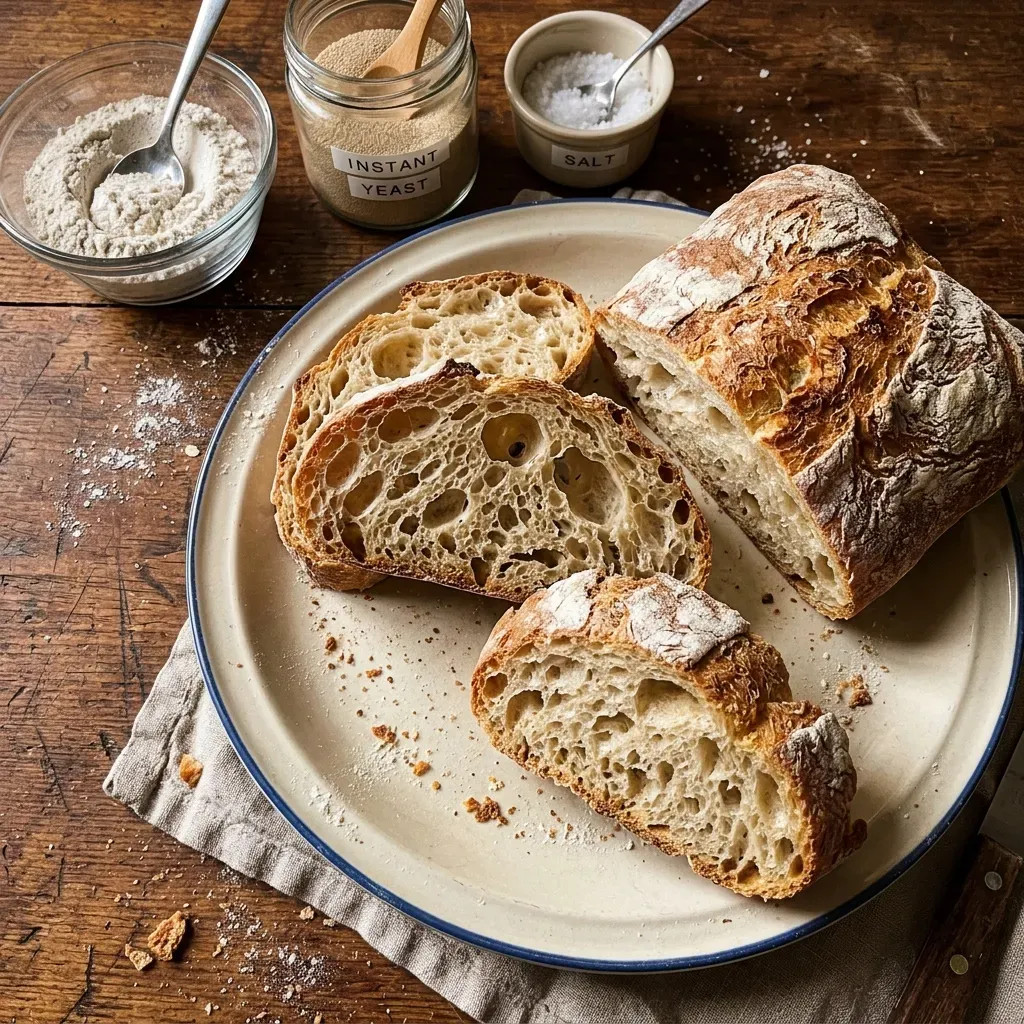
These tips guarantee a perfect crumb. First, use a digital scale for accuracy. Weighing flour prevents a dry dough.
Second, do not rush the fermentation. Long, slow rises develop flavor. Third, handle the dough with wet hands to avoid sticking.
Fourth, use a spray bottle to mist the oven for steam. Finally, let the loaf cool fully. Cutting too early ruins the texture. Master these details for exceptional Traditional Italian Ciabatta.
Mastering a few key techniques—like weighing your flour and using wet hands to handle the sticky dough—guarantees a perfect crumb every time. For another wholesome baking project, check out Pumpkin Zucchini Bread.
STORAGE & REHEATING TIPS
Store your Traditional Italian Ciabatta at room temperature. Wrap it in a cotton kitchen towel. It stays fresh for two days.
Do not refrigerate it. That dries out the bread. For longer storage, slice and freeze it.
To reheat, spritz with water. Warm it in a 350°F oven for five minutes. This restores the crisp crust.
Avoid the microwave for any Traditional Italian Ciabatta. It becomes rubbery.
WHAT TO SERVE WITH THIS RECIPE
This Traditional Italian Ciabatta is incredibly versatile. Serve it alongside pasta or minestrone soup. Use it for panini sandwiches with prosciutto and mozzarella.
Dip it into olive oil and balsamic vinegar. It also makes fantastic bruschetta. Toast slices and top with tomatoes and basil.
For a simple dinner, pair it with a green salad. My kids love it with butter and jam for breakfast.
This ciabatta pairs wonderfully with soups, salads, or as bruschetta topped with fresh tomatoes and basil. For a bold dipping sauce to complement your bread, try Vegan Bang Bang Sauce.
FAQs
Why is my Traditional Italian Ciabatta dough so sticky?
That is normal. The high hydration creates the open crumb. Do not add more flour. Use wet hands and plenty of bench flour during shaping.
Can I use active dry yeast instead of instant?
Yes. Use 1 ¼ teaspoons of active dry yeast. Dissolve it in the warm water first. Let it foam for 5 minutes.
How do I know when the dough is fermented enough?
The dough should triple in size. It will feel jiggly and have visible air bubbles. Gently poke it. If the indentation springs back slowly, it is ready.
Can I make this Traditional Italian Ciabatta in a bread machine?
I do not recommend it. The high hydration dough is too soft. The machine cannot handle the stretch and folds. Stick to hand mixing.
Traditional Italian Ciabatta is a rustic white bread known for its elongated shape, crisp crust, and irregular, airy crumb. Its development in the 1980s in the Veneto region of Italy revolutionized artisan baking and remains a staple of Italian cuisine, often enjoyed as a ciabatta roll for sandwiches or served with olive oil.
Nutrition Information (per serving)
| Nutrient | Amount |
|---|---|
| Calories | 180 |
| Fat | 1g |
| Carbohydrates | 36g |
| Protein | 6g |
| Sodium | 390mg |