
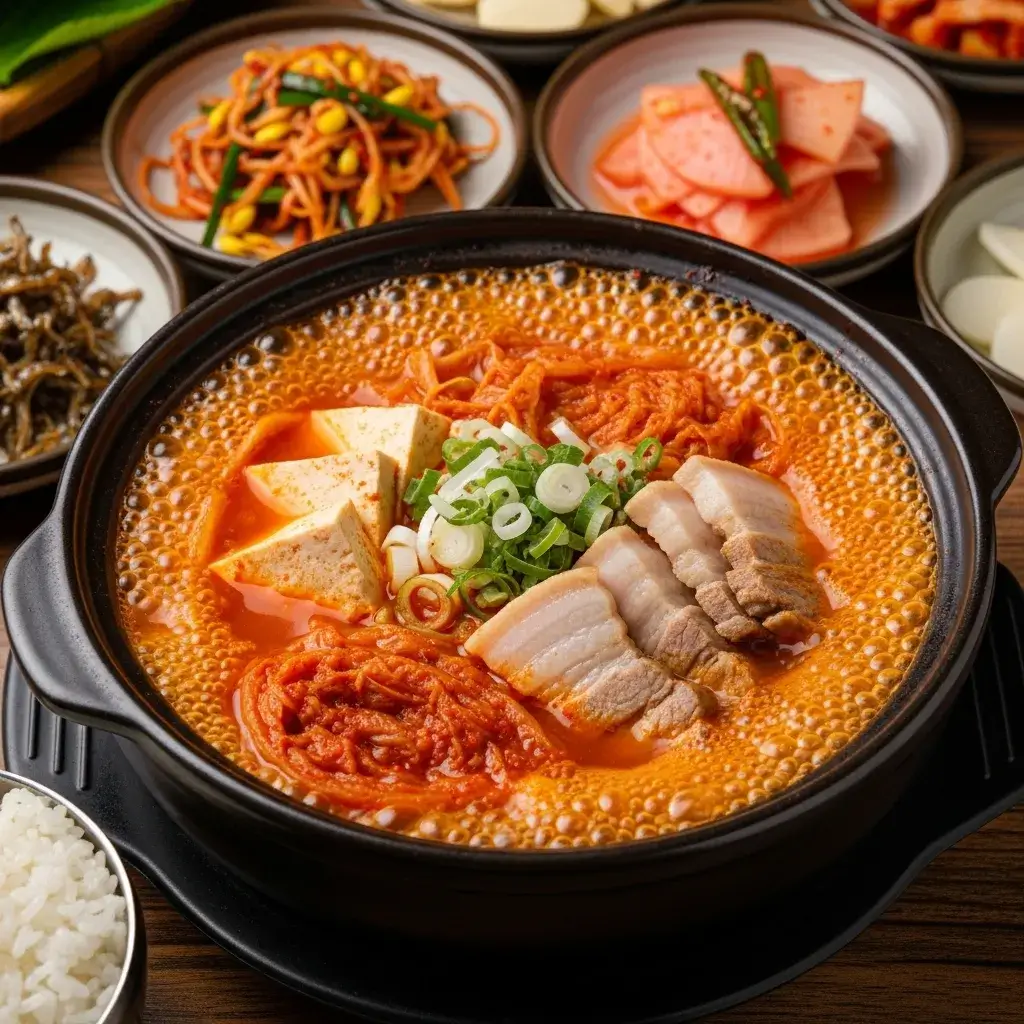
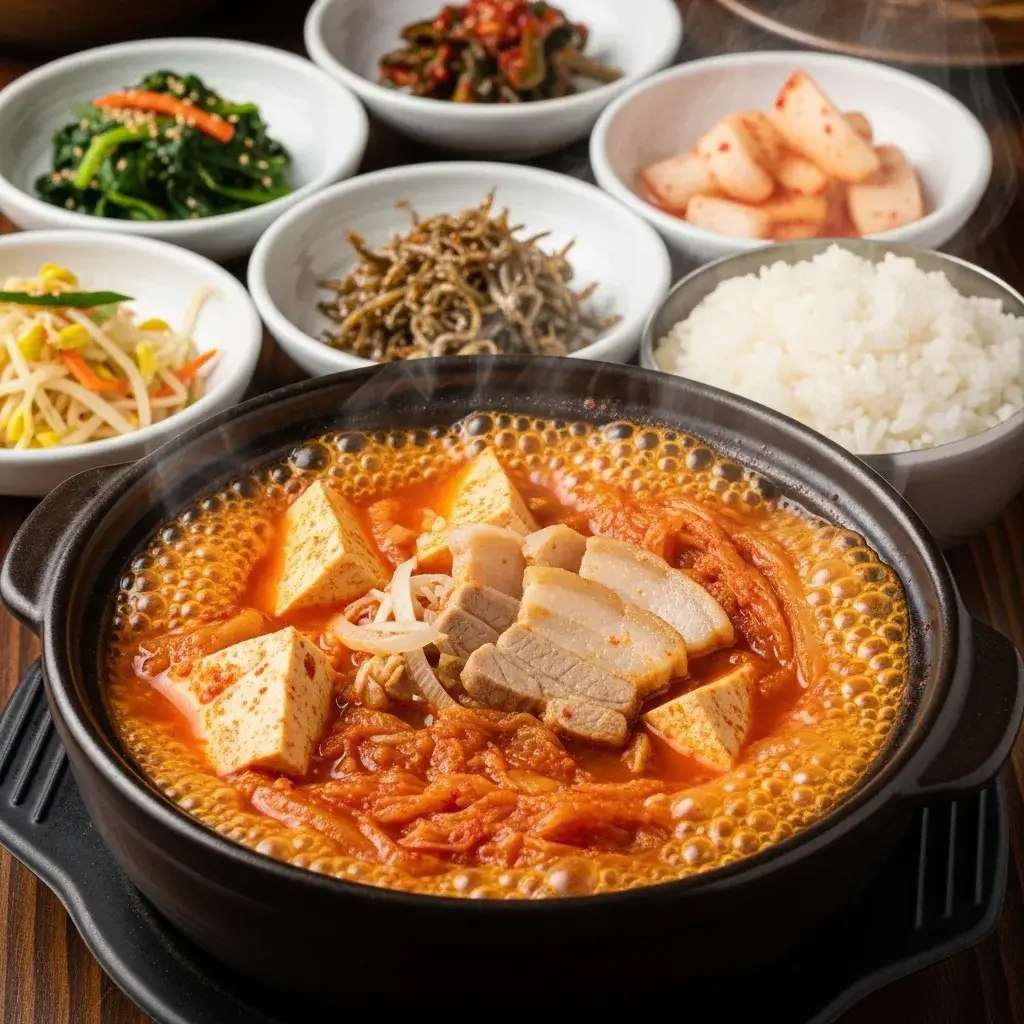
Imagine a pot of soup that’s bubbling, fiery red, and filled with the most intoxicating aroma of fermented kimchi, savory pork, and silky tofu. That first spoonful hits you with a complex symphony: tangy, spicy, deeply umami, and utterly comforting. This is Kimchi Jjigae, not just any soup, but Korea’s most beloved stew, a dish that warms you from the inside out and nourishes the soul.
With this kimchi soup recipe, you can recreate that authentic, restaurant-quality experience in your own kitchen. It’s surprisingly simple, endlessly adaptable, and guaranteed to become a staple in your home.
WHAT IS KIMCHI JJIGAE (KIMCHI SOUP)?
Kimchi Jjigae is a Korean stew centered around sour, well-fermented kimchi. It’s a staple in Korean households, often called a “comfort food” or a “meal for hard times” because it’s hearty, affordable, and incredibly satisfying. The magic lies in the fermented kimchi, which provides a deep, tangy, and complex base.
It’s typically cooked with protein (pork, tuna, or tofu), aromatics, and a rich broth, resulting in a robust, spicy, and slightly sour soup that’s served piping hot. This kimchi soup recipe will guide you to that perfect balance of flavors.
Print
Kimchi Soup Recipe (Kimchi Jjigae): The Ultimate Korean Comfort Food
- Total Time: 35 minutes
- Yield: 2 servings
Description
A bold, comforting Korean kimchi jjigae made with fermented kimchi, savory broth, and hearty ingredients for a deeply satisfying soup.
Ingredients
- Aged kimchi, chopped
- Kimchi juice
- Pork belly or canned tuna
- Onion, sliced
- Garlic, minced
- Gochujang
- Gochugaru
- Soy sauce
- Sesame oil
- Anchovy-kelp stock or water
- Tofu, cubed
- Green onions
Instructions
- 1. Heat a pot over medium heat and add sesame oil.
- 2. Add pork belly or tuna and cook briefly until lightly browned or heated through.
- 3. Stir in kimchi, onion, and garlic and sauté until fragrant.
- 4. Add gochujang, gochugaru, soy sauce, and kimchi juice.
- 5. Pour in anchovy-kelp stock and bring to a boil.
- 6. Reduce heat and simmer to develop flavor.
- 7. Add tofu and continue simmering until heated through.
- 8. Taste and adjust seasoning if needed.
- 9. Garnish with green onions.
- 10. Serve hot with rice.
Notes
- Older, well-fermented kimchi gives the best flavor.
- Tuna is a quick alternative to pork.
- Adjust spice level with gochugaru to taste.
- Prep Time: 10 minutes
- Cook Time: 25 minutes
- Category: Soup
- Method: Stovetop
- Cuisine: Korean
Nutrition
- Serving Size: 1 bowl
- Calories: 340
- Sugar: 5g
- Sodium: 980mg
- Fat: 20g
- Saturated Fat: 7g
- Unsaturated Fat: 11g
- Trans Fat: 0g
- Carbohydrates: 18g
- Fiber: 4g
- Protein: 22g
- Cholesterol: 65mg
Keywords: kimchi jjigae, kimchi soup, Korean soup, spicy stew
WHY YOU’LL LOVE THIS KIMCHI SOUP RECIPE
Let me tell you why this stew is a keeper. First, it’s an explosion of complex flavors sour, spicy, savory, and umami all in one bowl. Second, it’s incredibly quick and easy. Once your ingredients are prepped, it comes together in under 30 minutes. Third, it’s the perfect way to use older, sour kimchi. In fact, the more fermented your kimchi, the better and more authentic your soup will taste. Finally, it’s highly customizable to your spice and protein preferences.
INGREDIENTS FOR AUTHENTIC KIMCHI SOUP
Gathering the right ingredients is key to an authentic taste.
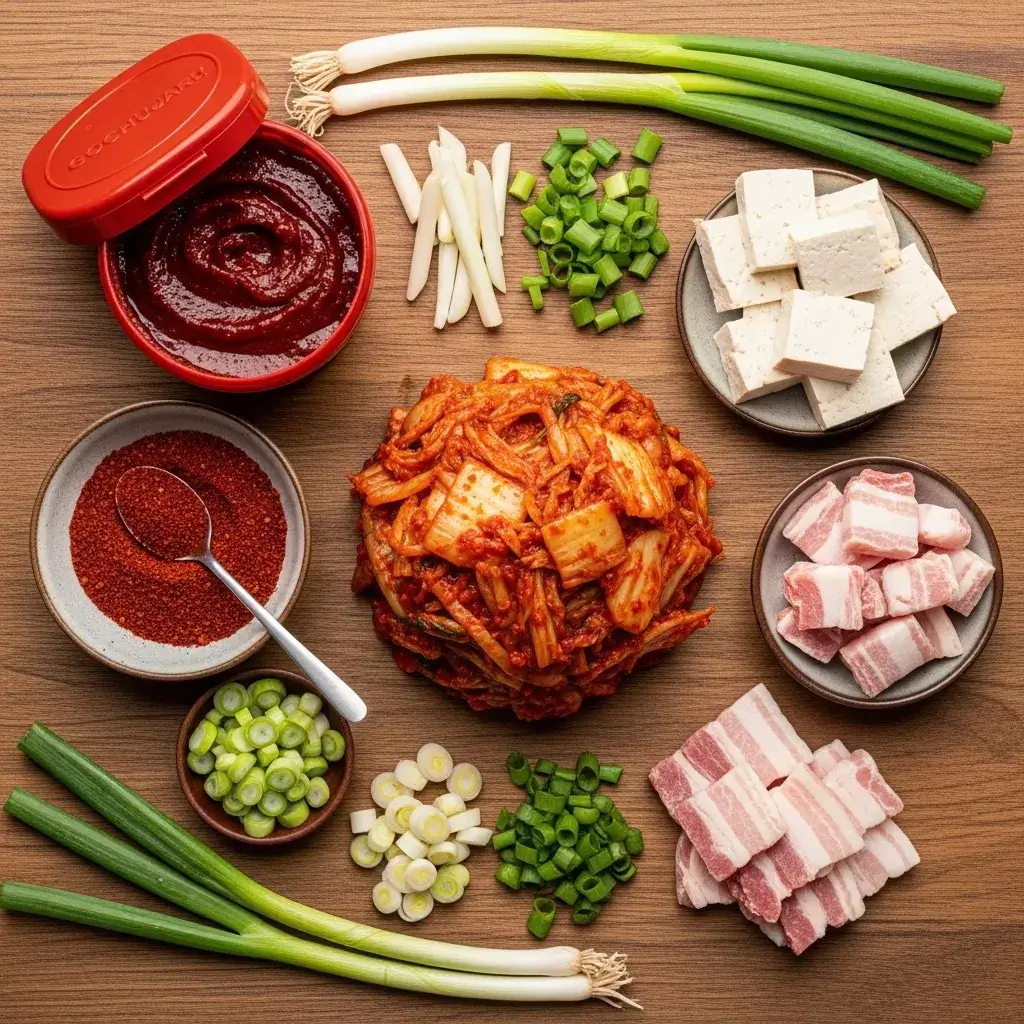
The Essential Foundation:
- 2 cups firmly packed, well-fermented napa cabbage kimchi, chopped, plus ¼ cup of the kimchi juice. This is the non-negotiable soul of the soup. The kimchi should taste noticeably sour.
- 6 oz pork belly or pork shoulder, thinly sliced (substitute: spam, canned tuna, or omit for vegan)
- 1 small onion, sliced
- 3-4 cloves garlic, minced
- 1 tsp grated ginger
- 2-3 green onions, chopped
For the Broth & Seasoning:
- 2 cups anchovy-kelp broth (myeolchi-dasima yuksu) or vegetable broth. *For quick anchovy broth: Simmer 4 cups water with 6-8 dried anchovies (heads/guts removed) and a 4-inch piece of dried kelp (dashima) for 15 mins. Strain.*
- 1 tbsp gochugaru (Korean red chili pepper flakes) – Adjust to your heat level.
- 1 tbsp gochujang (Korean chili paste) – For depth and a touch of sweetness.
- 1 tbsp soy sauce (or 2 tbsp for a stronger saltiness instead of doenjang)
- 1 tbsp doenjang (Korean fermented soybean paste) – Optional but highly recommended for authentic, deep umami.
- 1 tsp sugar or honey – To balance the sourness.
- 1 tsp sesame oil
The Finishing Touches:
- 1 package (12-16 oz) soft or medium-firm tofu, cut into thick cubes
- Optional additions: sliced mushrooms, zucchini, or a cracked egg on top at the end.
TOOLS YOU’LL NEED
A medium-sized earthenware pot (ttukbaegi) is traditional and retains heat beautifully, but a small Dutch oven or heavy-bottomed pot works perfectly.
STEP-BY-STEP: HOW TO MAKE KIMCHI SOUP (KIMCHI JJIGAE)
Follow this simple process for layers of flavor.
1. SAUTÉ THE KIMCHI AND PORK
In your pot over medium-high heat, add the sliced pork belly. Cook for 2-3 minutes until it starts to render fat and brown slightly. Push the pork to the side, and add the chopped kimchi, onion, garlic, and ginger to the center. Sauté everything together for 5-7 minutes. This crucial step deepens the kimchi’s flavor and mellows its raw tang.

2. BUILD THE BROTH
Add the gochugaru (chili flakes) and gochujang (chili paste) to the pot. Stir for 1 minute until fragrant. Pour in the broth, kimchi juice, soy sauce, doenjang (if using), and sugar. Stir well to dissolve the pastes. Bring to a boil.
3. SIMMER FOR DEPTH
Once boiling, reduce the heat to medium-low. Cover and let it simmer for 15-20 minutes. This allows all the flavors to meld and the pork to become tender.
4. ADD THE TOFU AND FINISH
Gently add the cubed tofu and any optional vegetables like mushrooms. Simmer uncovered for another 5 minutes. Be careful not to stir vigorously to keep the tofu intact. Right before serving, drizzle with sesame oil and sprinkle with chopped green onions.
5. SERVE PIPING HOT
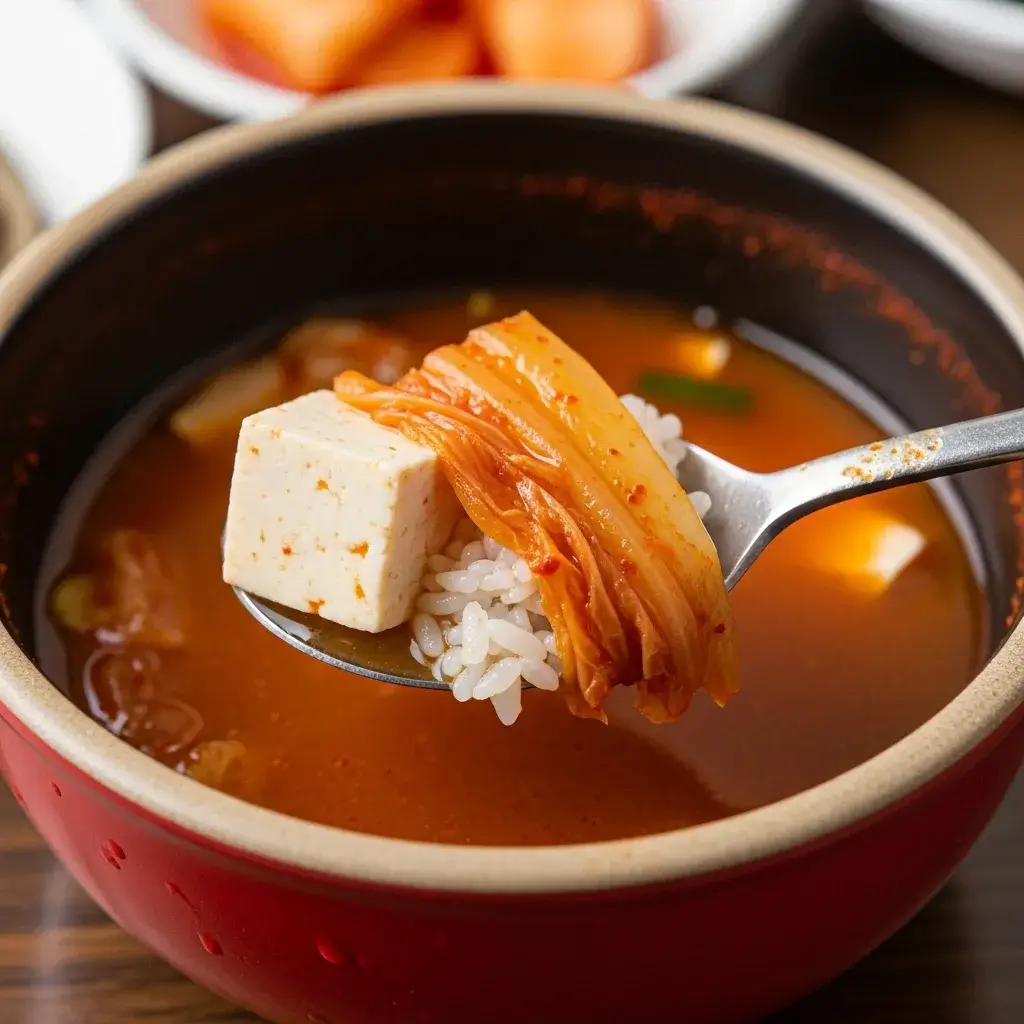
Serve your kimchi soup immediately while it’s still bubbling! It’s traditionally served with a bowl of steamed rice and side dishes (banchan). Ladle the soup and tofu over rice for the perfect bite.
THE SECRET TO THE BEST FLAVOR: SOUR KIMCHI
The single most important tip for an authentic kimchi soup recipe is to use well-fermented, sour kimchi. Fresh, recently made kimchi lacks the complex tang that defines this stew. If your kimchi isn’t tart enough, you can speed up the fermentation process by leaving it at room temperature for a day or two. That sourness is what creates the incredible depth of flavor.
PRO TIPS FOR KIMCHI SOUP PERFECTION
- Don’t Skip the Sauté: Sautéing the kimchi until it softens and darkens slightly is essential for developing a rich base.
- Adjust the Heat: Control the spice level with the gochugaru. Start with 1 tbsp and add more at the end if needed.
- The Protein is Flexible: While pork is classic, canned tuna (oil-packed) is a fantastic, pantry-friendly alternative. For vegan, use mushrooms and a rich vegetable broth.
- Let it Rest: Like many stews, kimchi jjigae often tastes even better the next day after the flavors have fully married.
VARIATIONS TO TRY
- Kimchi Jjigae with Tuna: Substitute pork with 1 can of oil-packed tuna (do not drain). Add it with the broth.
- Army Stew (Budae Jjigae): Add sliced spam, hot dogs, baked beans, ramen noodles, and cheese to your kimchi soup base for the ultimate fusion stew.
- Vegan Kimchi Jjigae: Omit pork, use vegetable broth, and load up with shiitake mushrooms and king oyster mushrooms for a meaty texture.
MAKE-AHEAD, STORAGE & REHEATING
- Storage: Cool completely and store in an airtight container in the refrigerator for up to 5 days. The flavor will continue to develop.
- Reheating: Reheat gently on the stovetop until bubbling. The tofu may break down slightly, but the flavor will be incredible.
- Freezing: You can freeze the soup base (without tofu) for up to 3 months. Add fresh tofu when reheating.
TROUBLESHOOTING COMMON QUESTIONS
- “My soup is too sour.” You used very old kimchi. Balance it with a bit more sugar or honey next time, and ensure you’re using enough broth.
- “It’s not spicy enough.” Add more gochugaru (chili flakes) at the end of cooking, or serve with a side of gochujang for individuals to stir in.
- “The broth is bland.” You likely didn’t sauté the kimchi long enough, or your broth was weak. Use the anchovy-kelp broth for authentic depth, and don’t rush the sauté step.
- “Can I use something besides pork?” Absolutely! Canned tuna, spam, or even leftover chicken are great. For vegan, use mushrooms.
SERVING SUGGESTIONS
Serve your kimchi soup in the pot it was cooked in for maximum heat retention. Place it in the center of the table with banchan (Korean side dishes) like spinach (sigeumchi-namul), cucumber salad (oi-muchim), and of course, plenty of steamed rice. The classic way to eat it is to spoon some soup and tofu over a bite of rice.
A PERSONAL NOTE: MORE THAN JUST SOUP
For me, kimchi jjigae is the taste of home and resilience. It’s the dish my Korean family made on busy weeknights and cold days, using the kimchi that had been patiently fermenting in the fridge. The process of making it, smelling the kimchi sauté, and hearing the pot bubble is incredibly comforting. It’s a humble dish that carries so much history and heart. I hope this kimchi soup recipe brings that same warmth to your table.
FINAL CHECKLIST BEFORE YOU COOK
- Kimchi is sour and well-fermented.
- Broth is prepared (anchovy or vegetable).
- Pork is thinly sliced (or alternative protein is ready).
- Tofu is drained and cubed.
FREQUENTLY ASKED QUESTIONS
What’s the difference between Kimchi Jjigae and Kimchi Soup?
They are generally the same. “Jjigae” (찌개) translates to “stew,” which is thicker and heartier than a clear “guk” (soup). This recipe is for the classic, thicker stew.
I can’t find gochugaru or gochujang. What can I use?
For gochugaru, a mix of cayenne and paprika can work in a pinch, but the flavor won’t be the same. For gochujang, a mix of miso paste, a little sugar, and cayenne can provide some approximation, but seeking out Korean ingredients is highly recommended for authentic flavor.
Is kimchi soup healthy?
Yes! Kimchi is a fermented food, rich in probiotics, vitamins, and antioxidants. This soup is packed with vegetables and protein, making it a nutritious, balanced meal.