
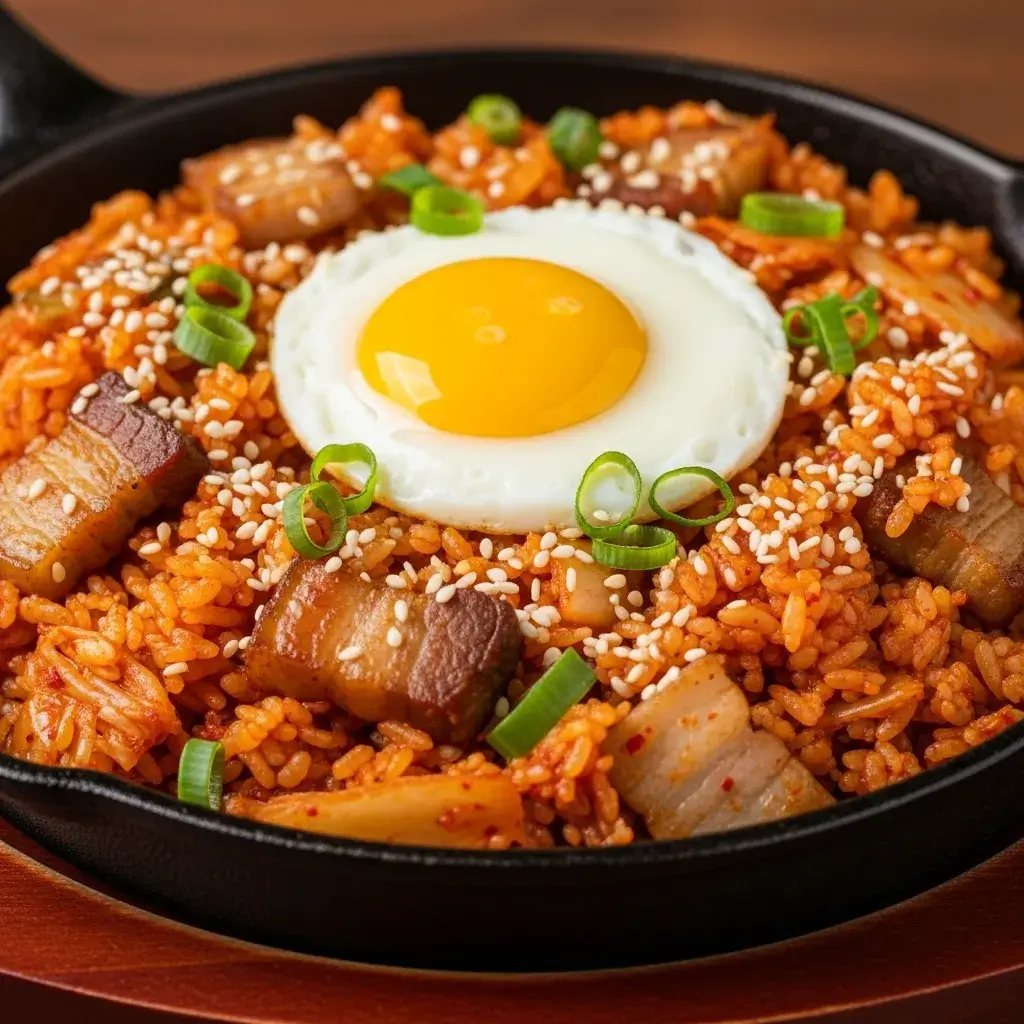
There’s a special kind of magic that happens in a screaming-hot pan when day-old rice meets tangy, fermented kimchi. It’s a sizzle that promises a meal that’s ridiculously fast, deeply comforting, and explosively flavorful. Kimchi fried rice (Kimchi Bokkeumbap) is that magic—a humble, pantry-friendly dish that transforms simple ingredients into a crave-worthy masterpiece. With just a few staples and about 15 minutes, you can create a meal that’s tangy, spicy, savory, and utterly satisfying. Let’s turn up the heat and make the easiest, most delicious kimchi fried rice you’ve ever had.
WHY THIS KIMCHI FRIED RICE RECIPE IS A WEEKDAY GAME-CHANGER
This dish is the answer to “What’s for dinner?” on your busiest nights. First, it’s incredibly quick and efficient. We’re talking 15 minutes from fridge to table. Second, it’s the perfect vehicle for leftover rice. In fact, day-old, dried-out rice is the secret to the perfect texture. Third, the flavor is complex and bold a perfect balance of sour, spicy, umami, and savory that wakes up your palate. Finally, it’s endlessly customizable. Add whatever protein or veggies you have, or keep it simple. This easy kimchi fried rice is a template for deliciousness.
Print
Kimchi Fried Rice! This authentic 15-minute recipe is tangy
- Total Time: 20 minutes
- Yield: 2 servings 1x
Description
A classic Korean comfort dish made with tangy kimchi, rice, and savory seasonings, quickly stir-fried for bold, satisfying flavor.
Ingredients
- 2 cups cooked short-grain rice, preferably day-old
- 1 cup napa cabbage kimchi, chopped
- 2 tablespoons kimchi juice
- 1 tablespoon vegetable oil
- 1 teaspoon sesame oil
- 2 cloves garlic, minced
- 2 green onions, sliced
- 1 teaspoon gochujang (Korean chili paste)
- 1 large egg
- 1 teaspoon soy sauce
- Roasted sesame seeds, for garnish
Instructions
- 1. Heat vegetable oil in a large skillet or wok over medium-high heat.
- 2. Add garlic and cook until fragrant, about 30 seconds.
- 3. Stir in kimchi and cook for 2 to 3 minutes until slightly caramelized.
- 4. Add rice and break it up with a spatula, stirring to combine with the kimchi.
- 5. Mix in kimchi juice, gochujang, and soy sauce until evenly coated.
- 6. Push rice to one side of the pan and crack the egg into the empty space; scramble lightly.
- 7. Fold the egg into the rice and drizzle with sesame oil.
- 8. Add green onions, stir once more, and remove from heat.
- 9. Garnish with sesame seeds and serve hot.
Notes
- Day-old rice works best because it is drier and fries more evenly.
- You can add spam, bacon, or tofu for extra protein.
- Adjust gochujang to taste depending on your spice preference.
- Prep Time: 10 minutes
- Cook Time: 10 minutes
- Category: Main Dish
- Method: Stir-Fry
- Cuisine: Korean
Nutrition
- Serving Size: 1 bowl
- Calories: 420
- Sugar: 4g
- Sodium: 820mg
- Fat: 14g
- Saturated Fat: 3g
- Unsaturated Fat: 10g
- Trans Fat: 0g
- Carbohydrates: 58g
- Fiber: 4g
- Protein: 12g
- Cholesterol: 95mg
Keywords: kimchi fried rice, bokkeumbap, Korean rice, quick dinner
INGREDIENTS FOR AUTHENTIC FLAVOR
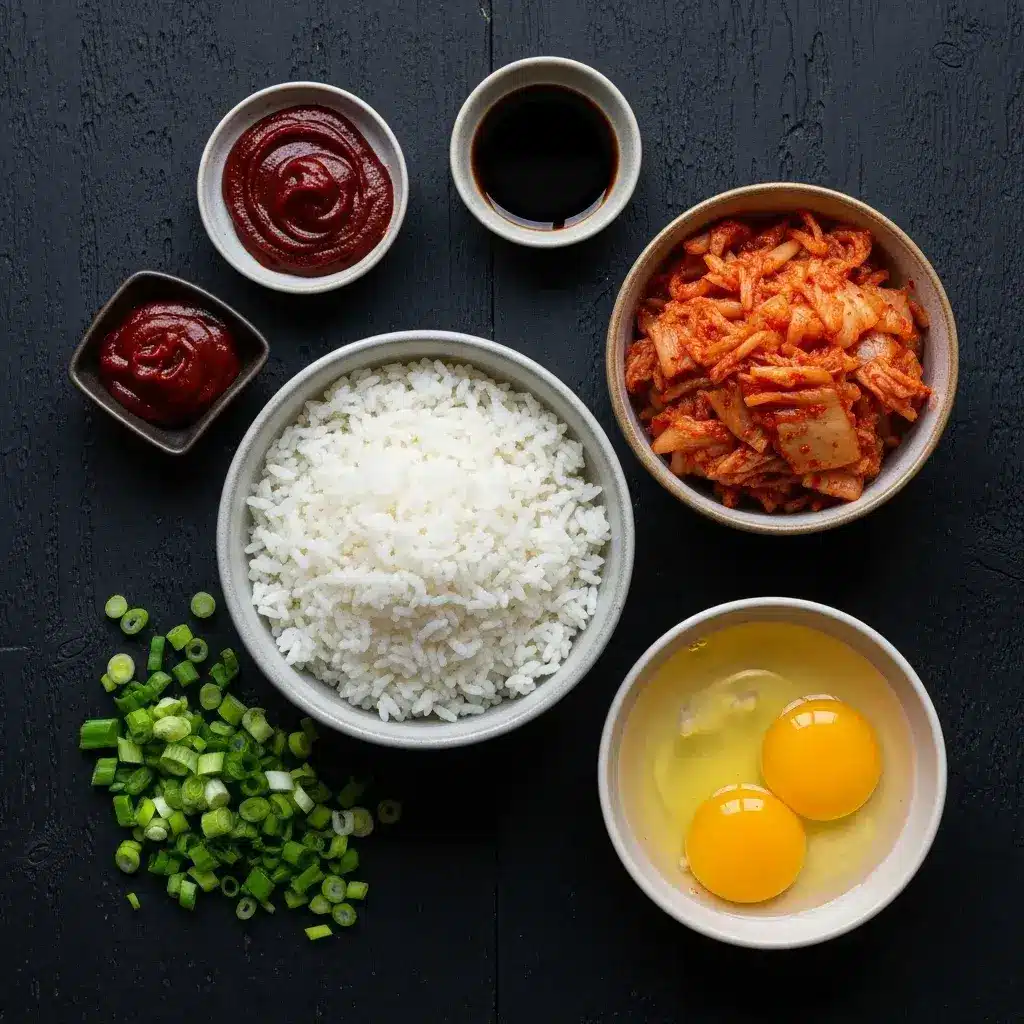
Gather these simple ingredients for a truly great kimchi fried rice.
The Non-Negotiables:
- 3 cups cooked, day-old white rice (jasmine or short-grain): Cold, clumpy rice fries best.
- 1 cup well-fermented napa cabbage kimchi, chopped, plus 2 tbsp kimchi juice: The sour kimchi is the star.
- 2-3 tbsp neutral oil (vegetable, canola)
- 2-3 green onions, chopped (whites and greens separated)
- 2 cloves garlic, minced
- 1 tbsp soy sauce (or tamari)
- 1 tbsp gochujang (Korean chili paste): For depth and spice.
- 1 tsp sesame oil
- 1 tsp sugar (to balance acidity)
- Salt and pepper to taste
The Classic Add-Ins (Choose 1 or 2):
- Protein: ½ cup diced Spam, chopped cooked bacon, or 1 cup shredded cooked chicken.
- Vegetables: ½ cup frozen peas and carrots, or ½ cup diced onion.
- The Essential Topping: 1 fried egg per serving, with a runny yolk.
TOOLS YOU’LL NEED
A large wok or a heavy-bottomed skillet (cast iron is great), a spatula or wok turner, and a bowl for your eggs. That’s it!
STEP-BY-STEP: HOW TO MAKE PERFECT KIMCHI FRIED RICE
The key is high heat and moving quickly.
1. PREP AND PREHEAT
Chop your kimchi into bite-sized pieces, reserving the juice. Chop your green onions, separating the white bottoms from the green tops. Mince the garlic. Have all your ingredients measured and near the stove. This is a fast process!
2. FRY THE KIMCHI AND AROMATICS
Heat your wok or large skillet over medium-high heat until very hot. Add the neutral oil. Add the white parts of the green onions and the minced garlic. Stir for 30 seconds until fragrant. Add the chopped kimchi. Stir-fry for 3-4 minutes until the kimchi is heated through and slightly caramelized at the edges.
3. SEASON AND BUILD FLAVOR
Push the kimchi to one side. Add the gochujang to the empty space in the pan and let it sizzle for 15 seconds to wake up its flavor. Then, add the soy sauce, sesame oil, and sugar directly into the kimchi mixture. Stir everything together quickly.
4. ADD THE RICE AND FRY
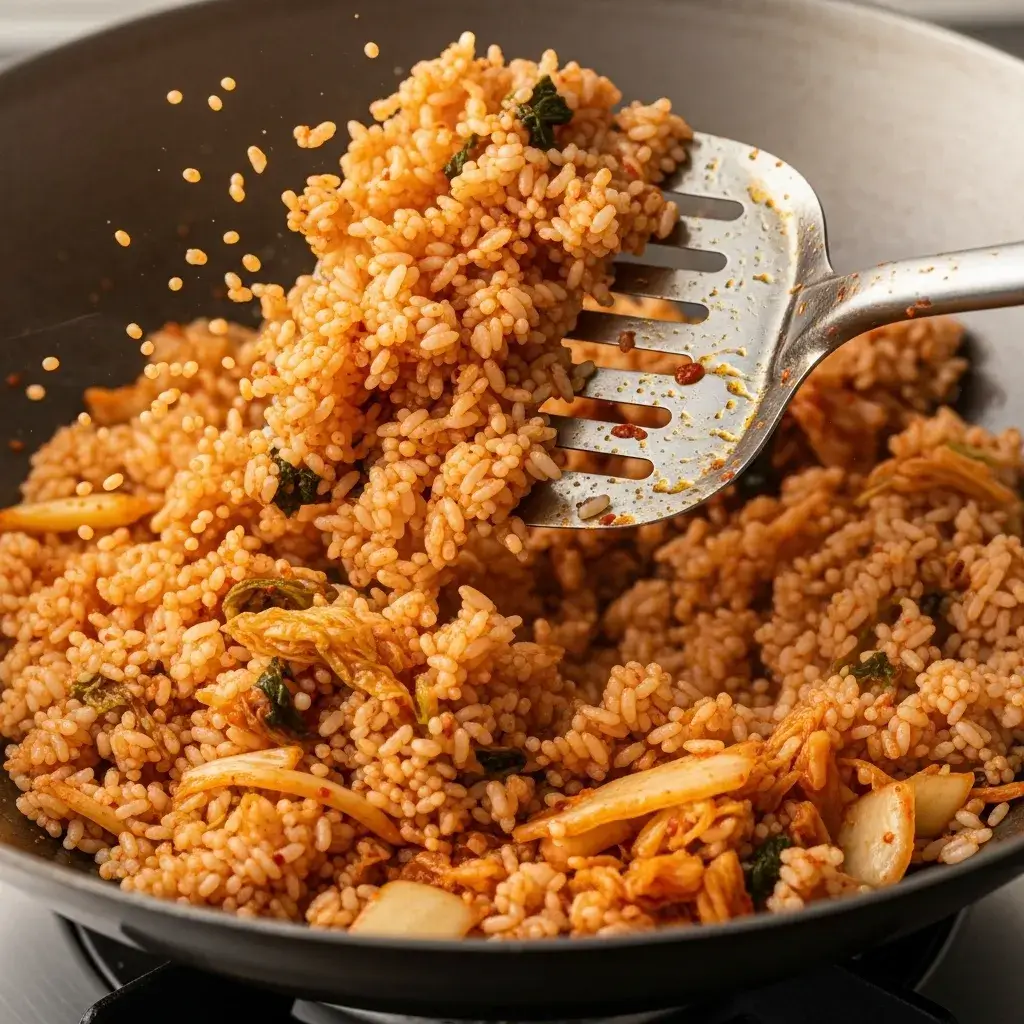
Add the cold, day-old rice to the pan. Use your spatula to break up any large clumps. Stir-fry vigorously, tossing and pressing the rice into the pan, for 4-5 minutes. The goal is to heat the rice through, coat every grain with the flavorful kimchi mixture, and get a little bit of a crispy “wok hei” char on some bits. Add the reserved kimchi juice halfway through for extra tang and color.
5. FINISH AND SERVE
Turn off the heat. Stir in the green onion tops. Taste and adjust seasoning with a pinch of salt or pepper if needed. While the rice rests for a minute, quickly fry your eggs in a separate pan until the whites are set but the yolk is still runny.
6. PLATE LIKE A PRO
Divide the hot kimchi fried rice between bowls. Top each with a fried egg. Garnish with a sprinkle of sesame seeds, a drizzle of sesame oil, and maybe a little extra green onion. Serve immediately!
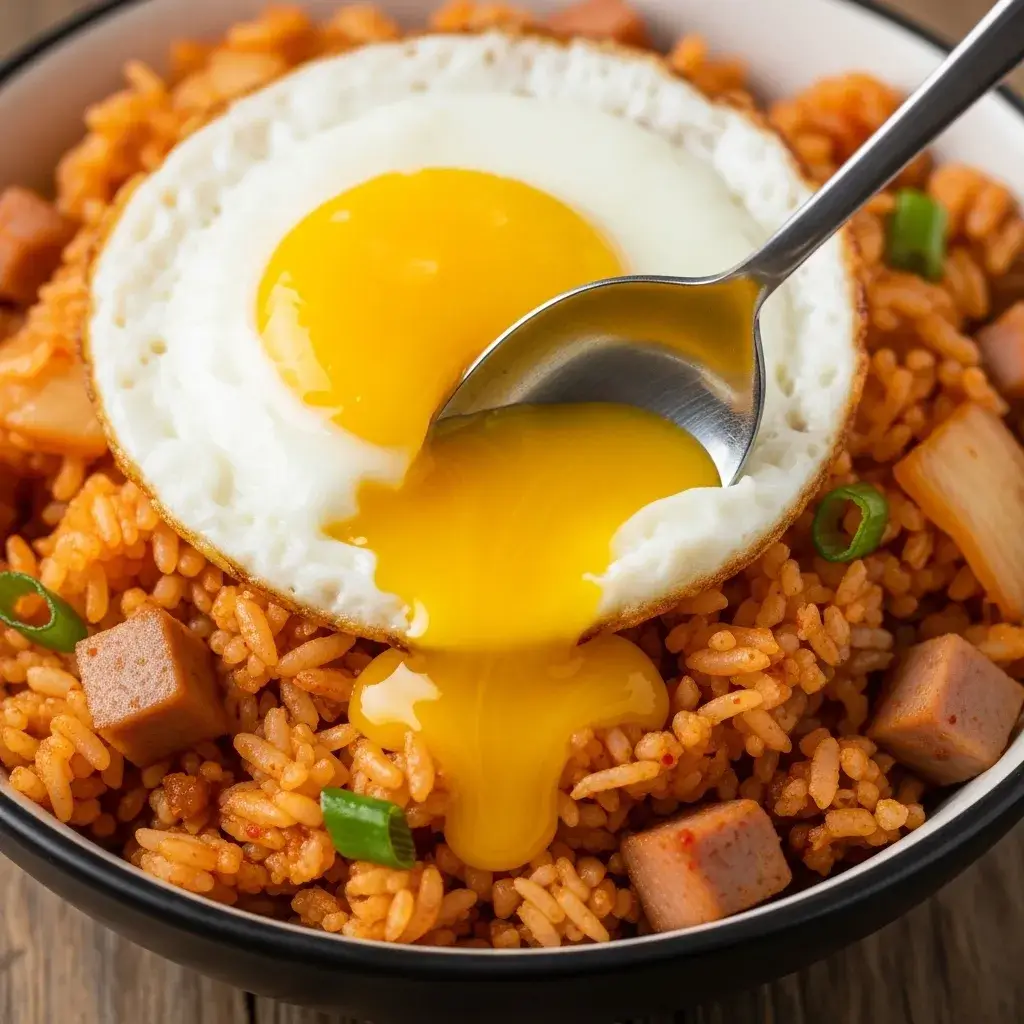
THE SECRET TO THE PERFECT TEXTURE
The single most important tip for authentic kimchi fried rice is to use day-old, cold rice. Freshly cooked rice is too moist and sticky, and will turn to mush in the pan. The drier, separate grains of day-old rice absorb the flavors beautifully and get that perfect slightly chewy, slightly crispy texture. Spread your cooked rice on a baking sheet and let it dry in the fridge uncovered for an hour if you’re in a pinch.
PRO TIPS FOR RESTAURANT-QUALITY RESULTS
- Use Well-Fermented Kimchi: The sour, tangy flavor of older kimchi is what makes the dish. Fresh kimchi won’t have the same depth.
- Don’t Crowd the Pan: Use a large enough wok or skillet so the rice can fry, not steam. Cook in batches if necessary.
- Get the Pan Hot: A hot pan is crucial for that signature “wok hei” (breath of the wok) flavor and to prevent the rice from becoming soggy.
- The Gochujang Sizzle: Letting the gochujang touch the hot pan directly for a few seconds before stirring it in unlocks a deeper, roasted flavor.
VARIATIONS YOU’LL LOVE
- Spam Kimchi Fried Rice (Kimchi Bokkeumbap): The classic! Add diced Spam with the kimchi for a salty, savory punch.
- Tuna Kimchi Fried Rice: Stir in a can of drained oil-packed tuna at the end for a pantry-friendly protein boost.
- Vegetarian Delight: Skip the meat and add extra veggies like mushrooms, zucchini, and bell peppers.
- Cheesy Kimchi Fried Rice: For a decadent twist, top the finished rice with a handful of shredded mozzarella and broil for 2 minutes until bubbly.
MAKE-AHEAD, STORAGE & REHEATING
- Storage: Store leftover kimchi fried rice (without the egg) in an airtight container in the refrigerator for up to 3 days.
- Reheating: Reheat in a skillet over medium heat with a tiny splash of water to refresh the rice. The microwave will make it soggy.
- Make-Ahead: You can chop the kimchi and aromatics ahead of time. The rice must be cooked and chilled ahead.
TROUBLESHOOTING COMMON QUESTIONS
- “My rice is mushy/soft.” You likely used fresh, warm rice or didn’t have the pan hot enough. Always use cold, day-old rice.
- “It’s not spicy enough.” Add an extra teaspoon of gochujang, or serve with a side of Korean chili flakes (gochugaru).
- “The flavors taste flat.” You may have used kimchi that wasn’t sour enough. A splash of rice vinegar (½ tsp) can help mimic that tang in a pinch.
- “Can I use brown rice or quinoa?” Yes, but the texture will be different. Ensure it’s cold and dry for best results.
SERVING SUGGESTIONS
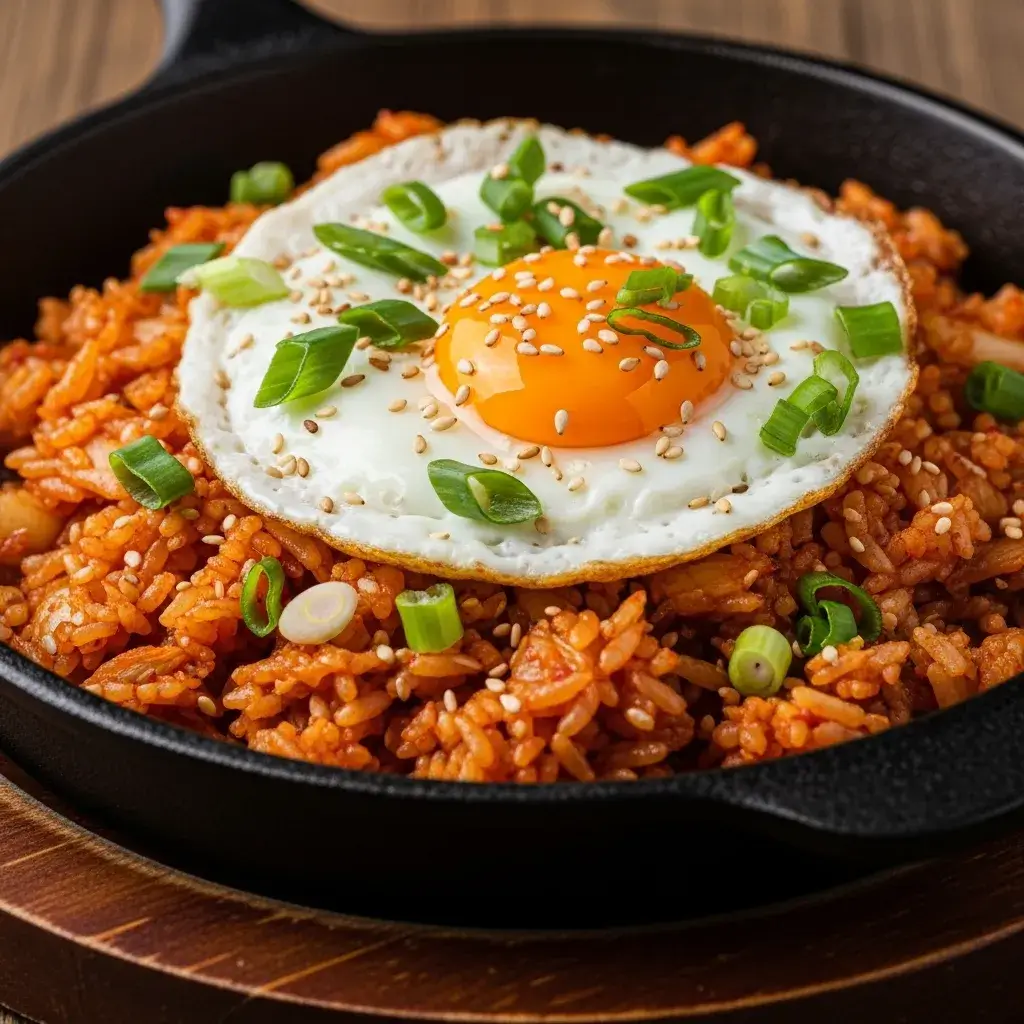
Serve your kimchi fried rice as a complete meal with the fried egg on top. It’s fantastic alongside a simple cucumber salad (oi muchim) or with classic Korean sides (banchan) like spinach (sigeumchi namul) and roasted seaweed (gim).
A PERSONAL NOTE: MORE THAN JUST FRIED RICE
For me, kimchi fried rice is the ultimate comfort food. It’s the dish I make when I’m tired, when the fridge seems empty, or when I need a quick taste of home. It’s resourceful, resilient, and packed with more flavor than seems possible for such simple ingredients. That moment when you break the runny egg yolk into the spicy rice is pure bliss. I hope this recipe becomes your go-to quick fix as well.
FINAL CHECKLIST BEFORE YOU START COOKING
- Rice is cooked, cold, and clumpy.
- Kimchi is sour and chopped.
- All sauces and aromatics are measured and ready.
- Wok or skillet is heating over medium-high heat.
FREQUENTLY ASKED QUESTIONS
What kind of rice is best for kimchi fried rice?
Day-old jasmine or medium/short-grain white rice (like Calrose) works perfectly. The key is that it’s cold and dry.
I don’t have gochujang. Can I skip it?
Gochujang adds essential depth and spice. If you must skip it, add ½ tbsp more soy sauce and a pinch of red pepper flakes, but seek out gochujang for the authentic flavor.
Is kimchi fried rice healthy?
Yes! It’s packed with probiotics from the fermented kimchi, and you control the oil and sodium. Adding vegetables and a lean protein makes it a balanced meal.